
How to determine the age of your appliances
Read more

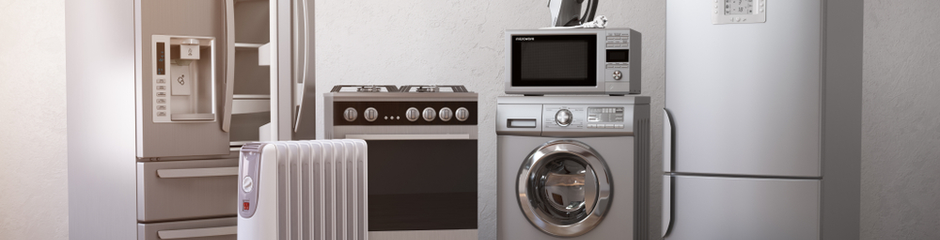
Home appliances are some of the most important components of our homes. Because major appliances play such a vital role in our lives, selecting the right ones is a big decision.
This guide will provide key information to consider when purchasing a new appliance or upgrading a major appliance.
Appliances are a big purchase item, and many of them are important to our daily lives. When purchasing or upgrading a home appliance — like a refrigerator to keep food cold or a range to heat your food — it’s important to make the right choice.
Take your time and consider all the options. Consider how you want to use the appliance. Think about how each option will fit into your household and if it can make your life easier. Price and reliability should also factor into your decision-making. Choosing a quality appliance can help save money on repairs or replacements in the long term. You can also save time, money and headaches by choosing a home warranty that covers appliances, like the Appliances plan offered by Cinch Home Services.
Think about how many times you use the refrigerator throughout the day. This is probably one of the most important and frequently used kitchen appliances in your home. You need a fridge that works reliably — keeps food at the proper temperature — and can take a lot of opening and closing (especially if you have hungry kids).
When looking for a refrigerator, you have a few types to choose from:
There are a few things to keep in mind when buying a new refrigerator for your household:
Covering your new refrigerator with a home warranty, like one from Cinch, can help ensure that if anything goes wrong, it’s repaired or replaced fast. Our Appliances plan covers all components and parts up to a certain limit, except for multi-media centers built into the refrigerator.
Microwaves make heating food faster and more convenient. Whether heating a snack or an entire microwavable meal, microwaves are another beloved staple of many household kitchens.
If you’re looking for a new microwave, you typically have three styles to choose from:
Before purchasing a microwave, determine your budget. Microwaves start at a relatively low price (+/- $50) and move up depending on the type, size, wattage and features. Next, make a list of the things your household uses a microwave for. This will help you narrow down which features you want.
For example, if you pop popcorn regularly or use your microwave to defrost food, you might want features to make those tasks easier. Some microwaves even come with sensors to keep track of your food or child locks.
The next consideration is size. Decide which models you want and consider how much space the microwave will use and its location. Make sure to measure the space so that you don’t end up with a microwave that doesn’t fit. You should also consider the wattage of the microwave. The wattage will impact the speed and evenness of the microwave when heating food. Higher wattage means faster completion.
Unlike having a wall oven and stove separate, a range is a combo unit. Ranges are another appliance you may use every day — especially if you love to cook. Cooking your food the right way is how you avoid food-borne illnesses, so knowing that your range is heating to and maintaining the right temperature is important.
Ranges have a standard width of 30 inches, but beyond that, there are plenty of options depending on what you want. Because of all the various options, ranges can be priced anywhere from $500 to $10,000 for a fully customized option. Ranges come in four different fuel options: electric, gas, dual-fuel and induction. Let’s look at each option.
If you’re looking for a new range, the first step is to know what fuel source you need. Does your kitchen have an electric, gas or dual hookup for the range? From there, know what style you want. You may have a standard space for the range. If not, consider a freestanding, slide-in or drop-in model.
When it comes to special features, ranges can be a foodie’s paradise. Think about how you want to use the range. You may want a double oven, which offers two baking chambers that can be set at different temperatures. Convection fans help circulate the heat inside the oven, creating more evenly baked food.
Some ranges have special cooking modes that can be set for the type of food you’re making. There are even options to control your range through Wi-Fi. As with anything else, what you select will impact your budget, so make sure you know what your budget is before deciding.
Another way to protect your budget with a new appliance is to purchase a Cinch Appliances plan. That way, if something goes wrong with your range because of normal wear and tear, the components and parts can be replaced or repaired quickly.
If you’ve ever had to hand-wash dishes, you probably understand the important role a properly functioning dishwasher can play. Additionally, running your dishwasher every day rather than hand-washing can save water and energy, depending on how you wash dishes. If you’ve been looking for a new dishwasher, don’t let the seemingly endless options overwhelm you.
Start with your budget. Dishwashers can range anywhere from $370 to over $3,500. A low to mid-range option can still give you the dishwashing power your household needs.
When it comes to picking out the right dishwasher, there are some things you want to research before making your selection. First, consider how much work you want to put into clean dishes. The better the dishwasher cleans, the less likely you’ll need to pre-clean your dishes — and cleaning power isn’t always indicative of the price, so look for reviews. You should also think about the number of dishes you use and what capacity you need your dishwasher to have.
The noise level might be the next biggest factor. Consider where the dishwasher will be located and what happens around that location — such as sleeping, conversations or watching television. Here again, reviews and even reading the specs can help you determine what kind of noise level to expect.
Finally, think about the styles, finishes and features offered. Different dishwashers offer distinct features that may not be useful. The dishwasher control panel might be located in an unusual place, as well, or the location might make things more or less convenient for you to use.
Having a washing machine to clean your clothes can save you time and money in the long run because you won’t have to take your clothes to the laundromat. Thus, buying a new laundry appliance is a big investment. You want to pick the right one for your needs but also stay within your budget. There are three types of washing machines:
The first thing you need to determine before purchasing a washing machine is where to put it. A washing machine is one of the largest appliances you can purchase, so make sure to measure how much space is available. You also want to make sure the washing machine will be level.
Your electric bill will go up with the addition of a washing machine, so thinking about energy-efficiency is important. Noise may also be a consideration depending on where and when you plan to use it. Some models are designed for quiet washes. Washing machines, like most appliances, come with a variety of features and finishes to choose from, and those should also factor into your decision.
If you plan to purchase a washing machine for your home, a Cinch Appliances plan can help cover the cost of repairs or replacements because of normal wear and tear.
If you live in a climate where it gets hot and/or humid, an air conditioner might be the single best thing you can add to your home. It’s also one of the most expensive, so it’s not a decision to rush into without research.
If you’re looking at installing or replacing a central air conditioner, it helps to start with some basic knowledge. Central air systems have a condenser, which is typically outside, an air-handling unit that typically has some kind of blower and an evaporator coil. Your home will also need to have ductwork to move the air around the house.
Possibly the biggest consideration for an air conditioner is energy-efficiency. It costs a lot to run an air conditioner, so the most efficient one you can purchase will cool you and your wallet down. Air conditioning units are all given a seasonal energy efficiency ratio (SEER) rating. Research ratings when choosing a new unit.
You need to consider your budget when thinking about replacing or installing an appliance — and an air conditioner is no different. Something to consider with your budget, though, are the long-term cost savings and maintenance costs. The higher your energy-efficiency is, the more you can save over the long term.
While we’ve discussed some major appliances you might want to add to your home, many other appliances might also make a big difference.
Small kitchen appliances like water filters, garbage disposals, coffee makers, toasters and air fryers can improve your time in the kitchen. Entire households can be healthier with the addition of dehumidifiers and air purifiers. With a little research and time, you can pick the best ones. However, with any purchase, make sure to consider the retailer sales, free delivery and rebates in the timing of your purchase.
Buying or upgrading major appliances is a big decision. With different styles, features and prices, there’s something for everyone. With a little time and research, you can find the right appliance — one that will suit the needs of everyone in your home and look good, too.
If you’re thinking about adding a new appliance or replacing an appliance in your home, picking the right option for you is an important step. Another equally important step is to consider a home warranty.
Cinch’s Appliances plan can help cover the cost of covered major appliances — like your refrigerator, washing machine and built-in microwave — that break down because of normal wear and tear. The best part is that our home protection plans come with a 180-day workmanship guarantee, rust and corrosion coverage and protection for unknown pre-existing conditions. Oh, and did we mention discounts on new appliances? Learn more and get a free quote today.

Please contact rbb Communications:

Your plan and pricing are waiting.

Request service, check coverage and more.